

From COP30 to CERAWeek 2026: Brazil Reaches the Final Gate of CCS Deployment
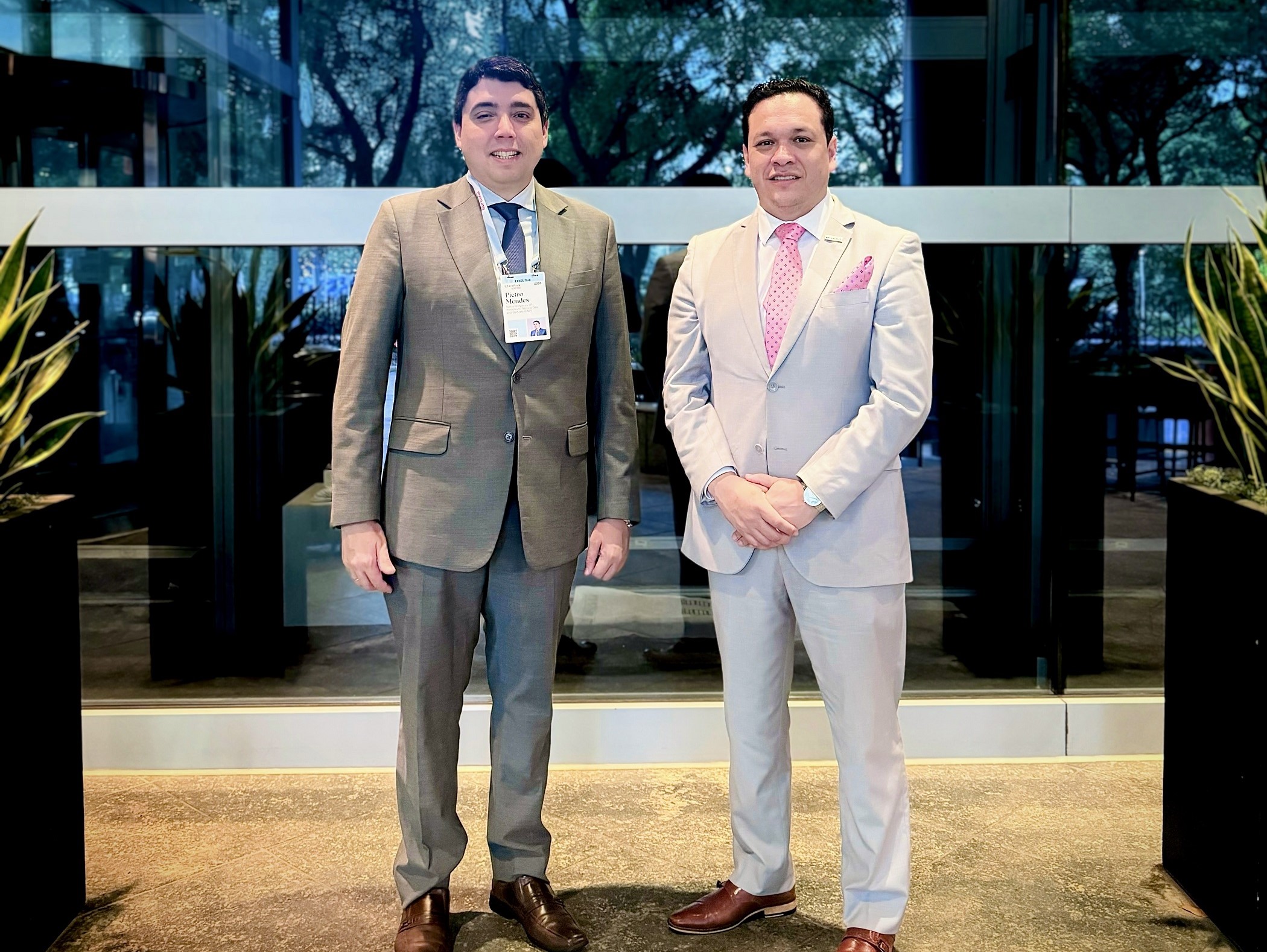
In Houston, Pietro Mendes (left), a Brazilian Senate-approved Director of ANP and SFLCT Chairman Fernando C. Hernandez meet at CERAWeek in 2026
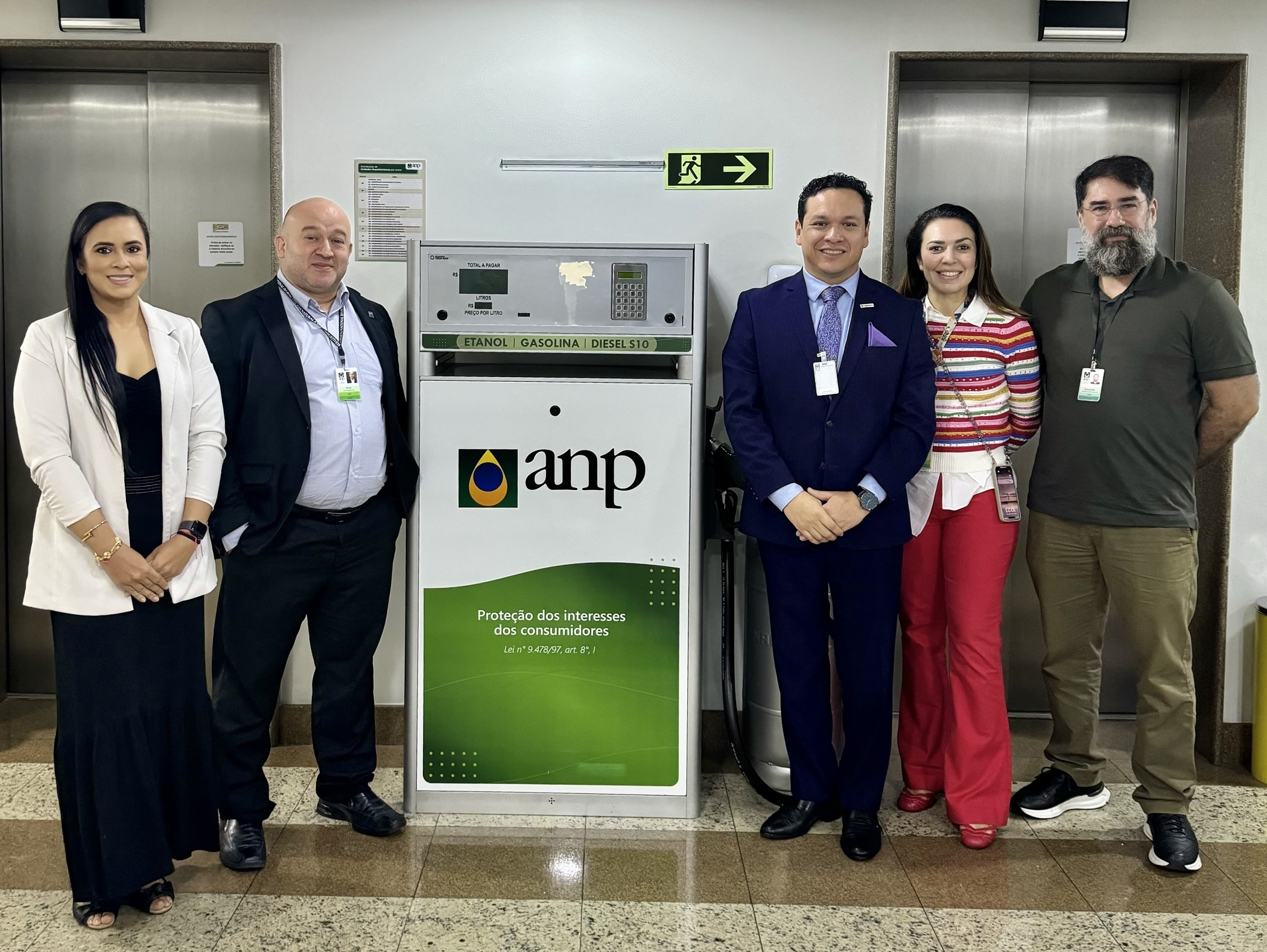
In Rio de Janeiro, SFLCT’s members meet with ANP staff to advance CCS regulatory dialogue in 2025
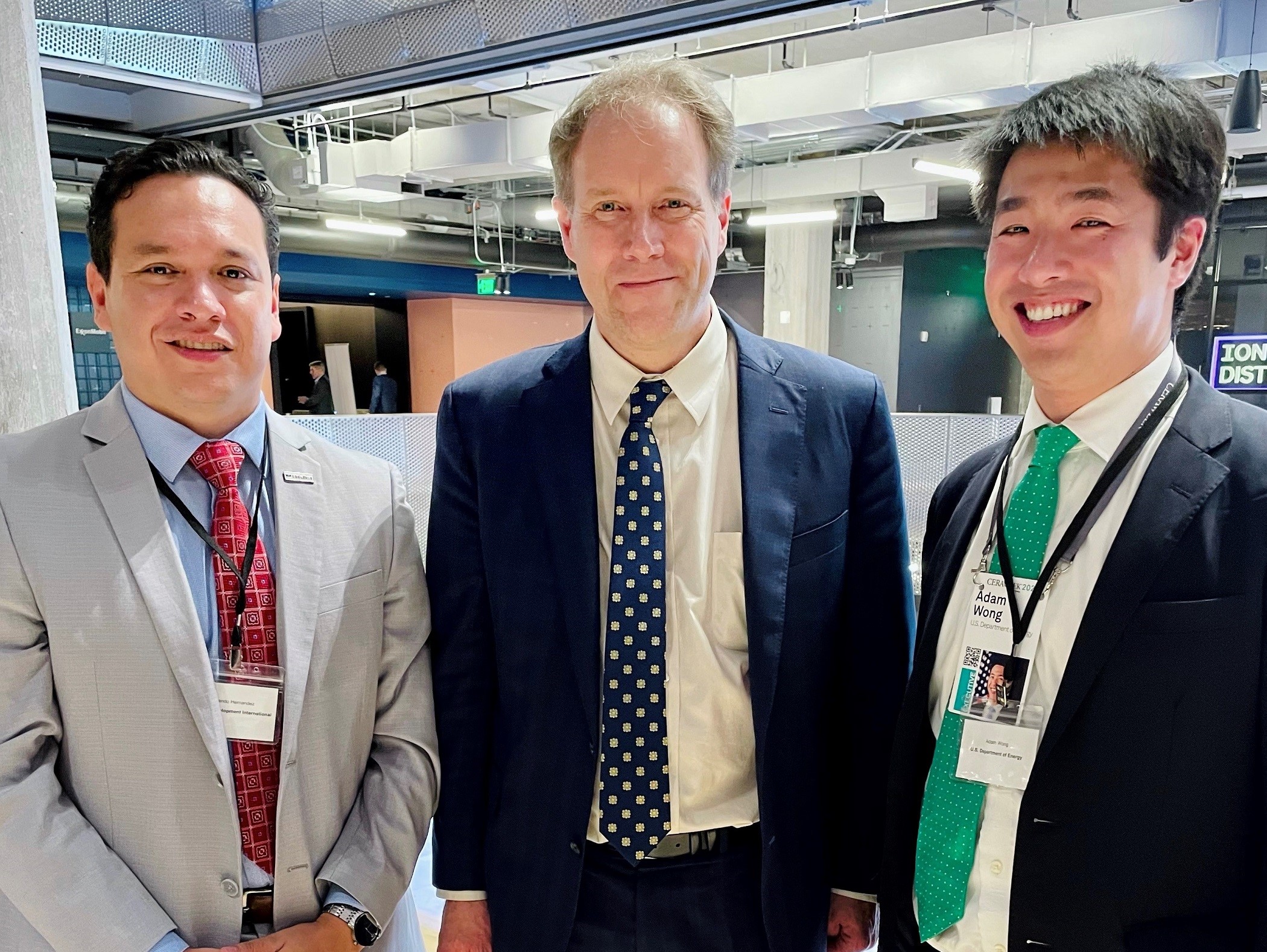
In Houston, Hernandez (left) meets with notable U.S. Department of Energy officials during CERAWeek in 2023
HOUSTON, TX, UNITED STATES, March 30, 2026 /EINPresswire.com/ -- In 2026, Brazil’s Carbon Capture Storage (CCS) landscape has shifted from a legislative framework to low-carbon execution via a draft decree released during COP30 in November 2025, where the Society for Low Carbon Technologies (SFLCT) was present. This has set in motion the operationalization of South America’s first CCS law, with the nation now approaching the final stage of executive consideration to formalize the decree, following the close of its public consultation in December.
Critically, Folha de S.Paulo (a Brazilian outlet) indicated the decree was in the final steps toward release in March, which remains to be seen at the time of writing. Despite this projection, an enacted decree can further clear the path for large-scale project authorizations and capital deployment, as demonstrated by FS Energia’s move to initiate the region’s first ethanol-to-CCS injection without Enhanced Oil Recovery (EOR) this year.
Elements of the COP30 advancement converged at CERAWeek 2026. This included a high-level meeting between Pietro Mendes, a Brazilian Senate-approved Director of the Agência Nacional do Petróleo, Gás Natural e Biocombustíveis (ANP), and SFLCT Chairman Fernando C. Hernandez, who leads the U.S.-founded and globally operating Non-Governmental Organization (NGO). Under the draft decree, ANP is formally designated as the statutory authority responsible for overseeing CCS and CO2 regulation. This interaction follows prior meetings in Brazil in 2025 between the ANP and SFLCT on CCS regulatory advancement, as covered in the Journal of Petroleum Technology (JPT).
To contextualize the 2026 CERAWeek meeting, it is necessary to return to CERAWeek 2023. There, a pivotal engagement with the U.S. Department of Energy, led by the SFLCT, established a U.S.-Brazil CCS pathway drawing on U.S. experience, forming part of the same documented continuum. This engagement preceded the enactment of Brazil’s CCS law in 2024, which the SFLCT helped shape.
Both ANP and SFLCT were participants in Brazil’s Ministério de Minas e Energia’s CCS Technical Executive Subcommittee alongside multisectoral stakeholders, which contributed to the preparation of the draft decree, as covered in the JPT, with FS Energia also represented within this subcommittee. Additionally, the CERAWeek discussion reflected the breadth of ANP’s national remit across biofuels and hydrocarbons, alongside its expansion into CCS as outlined in the decree.
As a global NGO, the SFLCT draws on institutional experience in CCS operations, including Shell Canada’s Quest project (2015) and U.S. Environmental Protection Agency (EPA) Class VI permitting and CO2 injection at North Dakota’s Blue Flint project (2023). This experience establishes a direct technical and regulatory analogue for the FS Energia project, aligned with EPA Class VI practice, approaching first injection under ANP oversight. Brazil’s sovereign path intersects with the U.S. ethanol-to-CCS trajectory as demonstrated by Archer Daniels Midland’s CO2 sequestration operations initiated in 2017 and reinforced by Blue Flint.
Notably, during the draft decree’s public consultation period, over $70 million in investment was committed to FS Energia’s project. Petrobras’ 2026–2030 Business Plan allocates approximately 14% of its $6.4 billion decarbonization portfolio to CCS, CO2 utilization, and related activities.
Notably, the SFLCT has extended its institutional experience to include Australia’s offshore sector in the Bonaparte and Browse Basins. This is material as Brazilian entities are gearing up across offshore and onshore areas for CCS without EOR, with operators such as TotalEnergies advancing a Brazilian offshore CCS program valued at over $155 million.
“In 2026, Brazil has reached a position to complete the North to South America CCS equation, a condition not yet realized across the Americas, and one that can be advanced via biospheric collaboration,” concludes Hernandez, adding that this sequential completion will be crucial for the low-carbon domain as the century advances beyond its first quarter.
***Publishing note: The views expressed are those of the SFLCT, a federally recognized U.S.-based 501(c)(3) nonprofit, and do not necessarily reflect the positions of any organizations referenced outside of SFLCT. This information is shared for educational, community-impact, and non-commercial purposes. No endorsement is implied. This publication aligns with SFLCT’s federally exempt status.***
Press Relations
Society for Low Carbon Technologies
email us here
Visit us on social media:
LinkedIn
Legal Disclaimer:
EIN Presswire provides this news content "as is" without warranty of any kind. We do not accept any responsibility or liability for the accuracy, content, images, videos, licenses, completeness, legality, or reliability of the information contained in this article. If you have any complaints or copyright issues related to this article, kindly contact the author above.
